

Every business owner deciding to hire their first virtual assistant runs into the same fork in the road. Do you find a freelancer on Upwork or Fiverr at $8 to $25 an hour and manage them yourself? Or do you pay more upfront for a managed VA agency that handles everything for you?
The honest answer is that both options can work — but for very different kinds of business, at very different stages, with very different time budgets. Pick the wrong one and you’ll either waste months babysitting a cheap hire, or burn cash paying for management you don’t actually need.
This is the no-nonsense 2026 comparison between managed VAs and freelance VAs. Real costs, real trade-offs, who each option is actually right for, and how to switch from one to the other if you started with the wrong model. By the end you’ll know which one to hire and exactly how to do it.
What a managed virtual assistant actually is

A managed virtual assistant is a VA who works inside your business through an agency that takes responsibility for the entire relationship. The agency sources the person, vets their skills, trains them on your tools and workflows, manages them day-to-day, runs quality control, and replaces them at no cost if the fit isn’t right.
You see the output. The agency handles everything behind it.
In practice, that means: the agency interviews and tests candidates before you ever speak to them. Daily check-ins and weekly QA reviews are run by the agency’s project managers, not you. SOPs, time tracking, communication standards, and tool training are pre-built. If your VA gets sick, takes leave, or underperforms, the agency steps in immediately. Spurtech’s managed VA approach is the model most agency owners and coaches default to once they’ve burned out trying to manage freelancers themselves.
The trade-off is price. Managed VAs cost more per hour than freelancers because you’re paying for the management infrastructure, not just the labour.
What a freelance virtual assistant actually is
A freelance virtual assistant is a self-employed individual you hire directly — usually through Upwork, Fiverr, OnlineJobs.ph, LinkedIn, or referrals. The relationship is one-to-one. You source them, you screen them, you train them, you manage them, and you replace them yourself if it doesn’t work out.
Quality varies enormously. A great freelance VA can be more dedicated than any managed placement because they’re directly invested in keeping you happy. A poor freelance VA can drain three months of your time before you realise it’s not working.
Freelancers are best when you have (a) a clear, narrow scope of work, (b) time to act as the hiring manager and trainer for the first 4 to 6 weeks, and (c) the operational maturity to write SOPs and run weekly check-ins yourself.
The real cost comparison — managed VA vs freelancer
Here’s what the four main hiring options actually cost in 2026, for the UK, US, and Australia markets.
| Hiring Route | Headline Cost | Your Management Cost | Replacement Risk |
|---|---|---|---|
|
Freelancer
Upwork / Fiverr / etc.
|
$8 – $25 / hour |
5–10 hours/week of your time |
High You restart hiring from scratch |
|
Offshore Direct Hire
Full-time
|
$800 – $1,800 / mo |
4–6 weeks onboarding, then 3–5 hrs/week |
Medium Re-hire, lose 2–4 weeks |
|
Managed VA Agency
✦ Best Value
|
$1,500 – $3,500 / mo |
<1 hour / week |
None Instant replacement, no cost |
In-House UK Hire |
$3,500 – $6,500 / mo
+ NI + benefits
|
3–5 hours / week |
Very High UK employment law applies |
Look closely at the headline cost vs the management cost. A $10/hour freelancer working 25 hours a week costs $1,000 a month — half the price of a managed VA. But if you spend 8 hours a week managing them, training them, fixing their work, and chasing updates, your $80/hour time is worth $2,560/month. The “cheap” hire is actually costing $3,560/month all-in.
A managed VA at $2,000 a month with less than an hour a week of your time involved costs $2,080/month all-in. Cheaper in real terms, with less risk, and zero ramp-up. See Spurtech’s flat-rate managed VA pricing for what an all-in managed cost looks like in 2026.
The hidden costs nobody mentions

Three costs of freelance VA hiring almost never appear in the comparison spreadsheets that founders build. Together they’re the reason most agencies eventually move to managed.
1. Your replacement cost when a freelancer flakes. Industry data shows freelance VA churn averages 5 to 7 months. When yours leaves, you lose 2 to 4 weeks of productivity rebuilding the relationship from scratch with someone new. At 25 hours a week of output, that’s $1,500 to $3,000 of work that doesn’t happen. Multiply by 1.5 replacements per year on average.
2. The quality tax. A freelance VA produces inconsistent output for the first 6 to 8 weeks. Errors slip through. Client work needs to be redone. You apologise to clients. You lose retainers. Conservative estimate: 10 to 15% of a new freelancer’s output is unusable in the first two months. That’s another $300 to $600 of waste.
3. The opportunity cost of your time. Every hour you spend writing job specs, reviewing 40 Upwork profiles, conducting interviews, building test tasks, and onboarding is an hour you’re not landing clients. If you’re an agency owner closing $2,000 retainers, 10 hours of hiring work is one missed retainer — $24,000 of annual recurring revenue you didn’t book. We see this pattern when working with clients on operational systems and appointment setter best practices — operator time is the most expensive resource in the business.
Managed VAs internalise all three of these costs into the monthly fee. Freelancers externalise them onto you and then quietly drain your business.
When you should hire a freelance VA
Be honest with yourself about which side of this split you’re on. Hire a freelancer when all four are true:
- Your scope is narrow and well-defined. You want one specific task done — graphic design, video editing, a single funnel build — not ongoing operational support.
- You need fewer than 15 hours a week of work. At low hours, the management overhead of a freelance hire is manageable.
- You have time and operational maturity. You already have SOPs, a clear communication cadence, and the discipline to run weekly check-ins.
- You’re early-stage and cash-constrained. If you don’t have $1,500+ per month of revenue to invest in a managed placement, a freelancer is the only realistic option.
Hire a freelance VA on Upwork, OnlineJobs.ph, or a referral. Run a paid test task before any longer engagement. Set a clear 30-day evaluation window.
When you should hire a managed VA
Switch to managed when any one of these is true:
- You bill clients to deadlines. The instant-replacement guarantee alone is worth the premium. A flaking freelancer can blow up a client relationship — a managed VA never can.
- You need 20+ hours of work a week. At this volume, the management overhead of a freelancer becomes a part-time job for you.
- You’re hiring for a technical specialism. CRM platforms, AI automation tools, and ads management require pre-vetted skill. Freelance markets are full of people who claim these skills and have surface-level competence. Managed agencies test before placement. If you need a GHL specialist specifically, see the full how to hire a GoHighLevel virtual assistant guide for the dedicated hiring process.
- You’re an agency owner serving clients. Your VAs are part of your delivery infrastructure. If they fail, your clients see it. Managed eliminates that risk.
- You’re scaling and don’t have time to babysit. The whole point of hiring help was to free your time. A freelance hire that demands 8 hours a week of your management did not free your time.
For most readers of this article — agency owners, coaches, ecommerce operators, SaaS founders — managed is the answer. The 20% who should still pick freelancers are early-stage operators with sub-$10k/month revenue and narrow scope.
How to switch from a freelancer to a managed VA
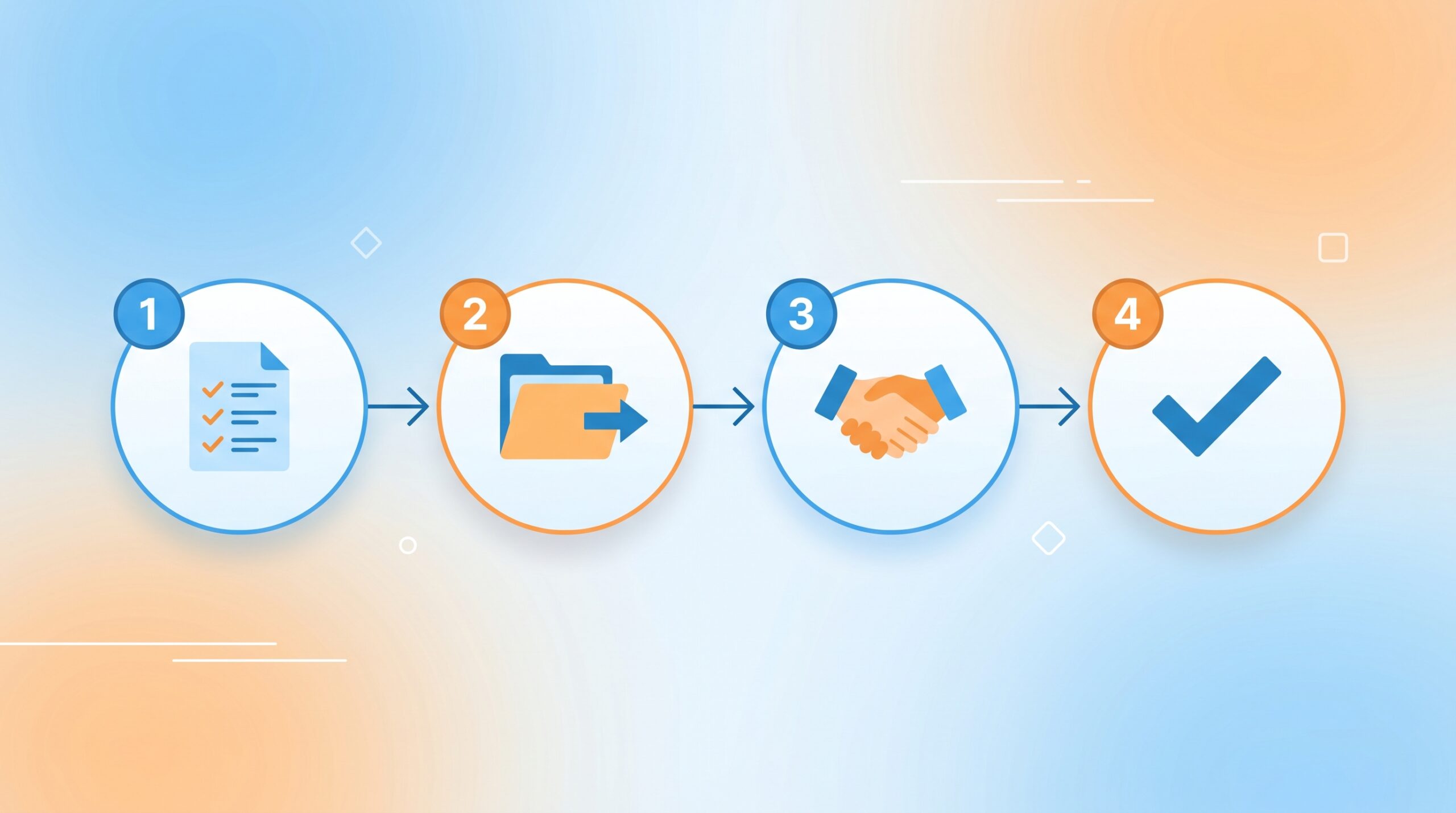
If you started with a freelancer and you’ve outgrown it, the transition takes 7 to 14 days done properly. Here’s the process.
Step 1 — Audit your current freelancer’s work
List every task they do, who depends on it, when it runs, and where the documentation lives (if any). Most freelancers run on tribal knowledge — fix that before transitioning. Build a simple Notion or Google Doc with the 5 to 10 most-used SOPs.
Step 2 — Brief the managed agency before transition
A good managed agency takes 2 to 5 working days to source and onboard your VA. Brief them with your scope, tools, time zone, and the SOPs from step 1 before you tell your freelancer anything.
Step 3 — Run a 5-day overlap
When the managed VA is ready, run a 5-day handover where both your freelancer and the new managed VA are working. The freelancer transfers context. The managed VA learns the live workflows. The agency PM observes and updates the internal SOP library.
Step 4 — Cut over cleanly
End the freelance arrangement on day 6 with proper notice. The managed VA is now solo and fully productive. The agency PM picks up daily check-ins. You stop managing.
Done well, this handover loses zero productivity. Done badly, it loses 2 to 3 weeks. The non-negotiable is the SOP audit in step 1 — if the work isn’t documented, nothing else works.
Mistakes to avoid in the managed vs freelancer decision
Three patterns we see every month from operators who picked wrong.
Picking freelance because of headline price. The all-in cost calculation almost always inverts the comparison. Run the spreadsheet honestly before deciding.
Picking managed too early. If your business hasn’t yet hit $5k/month in revenue and your scope of work is narrow, a managed placement is overkill. You’ll burn cash you should be putting into client acquisition. Start freelance. Upgrade when the operational pain forces you to.
Picking either model without an SOP layer. The biggest determinant of VA success isn’t the hiring model — it’s whether your workflows are documented. A freelancer with SOPs outperforms a managed VA without them. A managed VA with SOPs outperforms both. Build the documentation. Mature operators apply the same discipline to all execution work, which is why we wrote about how to improve appointment setting success the same way — repeatable systems beat individual talent.
FAQ
Ready to make the call?
If you read this and recognised your business in the “when you should hire a managed VA” section — you already know what to do. The only question is whether you do it this week or you put it off another two months while your evenings keep getting eaten by work someone else should be handling.
Spurtech places pre-vetted, fully managed virtual assistants inside your business in 24 to 48 hours. UK, US, and Australia time zones. Flat monthly pricing. Instant no-cost replacement guarantee. Daily QA done by our team, not by you.
Book a free 20-minute discovery call — no commitment, no pressure, just a clear picture of which VA your business actually needs. Or contact our team if you’d rather start with an email.